How to Use Recycled Pet Fabric for Sustainable Fashion?
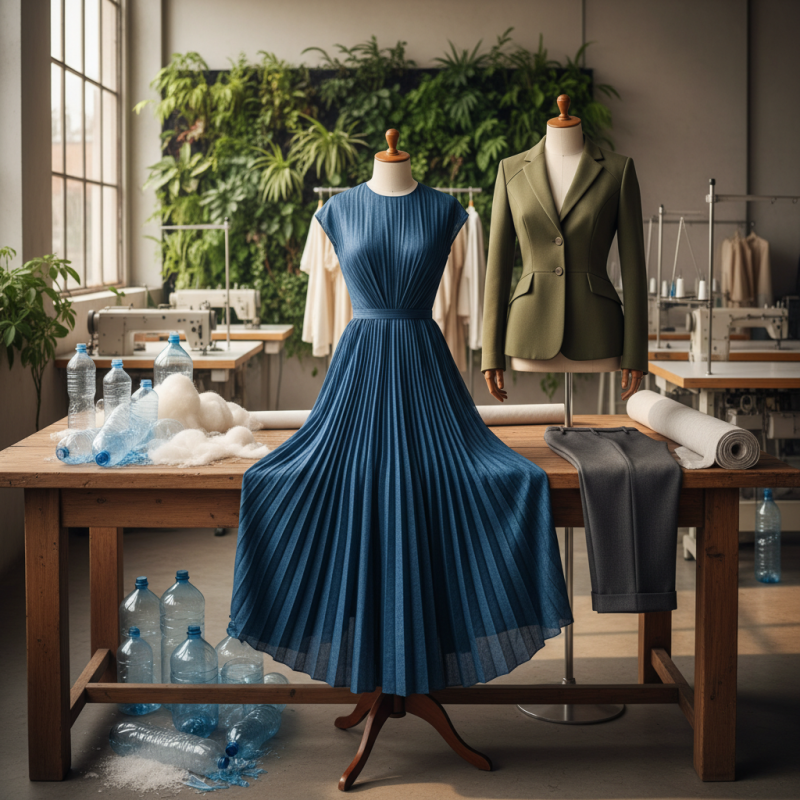
In a world increasingly aware of sustainability, Recycled Pet Fabric stands out. This innovative material comes from discarded plastic bottles, transforming waste into fashion. As designers turn to eco-friendly solutions, using Recycled Pet Fabric becomes more relevant.
The journey of Recycled Pet Fabric is intriguing. It minimizes landfill waste and reduces the need for new resources. However, not all designs fully embrace sustainability. Some brands use recycled fabric while neglecting ethical practices. This inconsistency can confuse consumers.
Fashion made from Recycled Pet Fabric can look stunning. Yet some products fail to meet performance standards. Quality may suffer, raising questions about long-term use. It's essential to explore both the benefits and limitations of Recycled Pet Fabric, pushing the industry forward while maintaining integrity.
Understanding Recycled PET Fabric: A Sustainable Material Overview
Recycled PET fabric, made from discarded plastic bottles, is gaining popularity in sustainable fashion. This material is lightweight and durable, making it suitable for various clothing items. The production process of recycled PET involves cleaning and shredding plastic bottles. These steps save energy compared to traditional fabric production methods.
Despite its benefits, recycled PET has some challenges. The quality can vary significantly depending on the source of the plastic. If the material is not sourced correctly, the fabric may not meet performance standards. Additionally, while the recycling process reduces waste, it does not eliminate plastic pollution entirely. The presence of microplastics in the environment remains a concern.
Sustainable fashion relies on consumer choices. Choosing recycled PET can reduce reliance on virgin materials. However, it’s crucial to consider the entire lifecycle of the product. Transparent labeling can help consumers make informed choices. Ultimately, embracing recycled PET fabric is a step toward a more responsible approach in the fashion industry.
The Process of Recycling PET: From Bottles to Fashion Fabrics
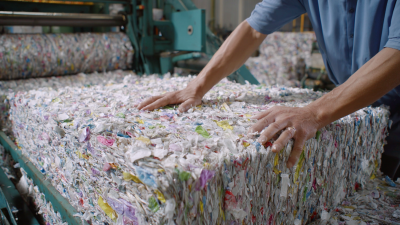
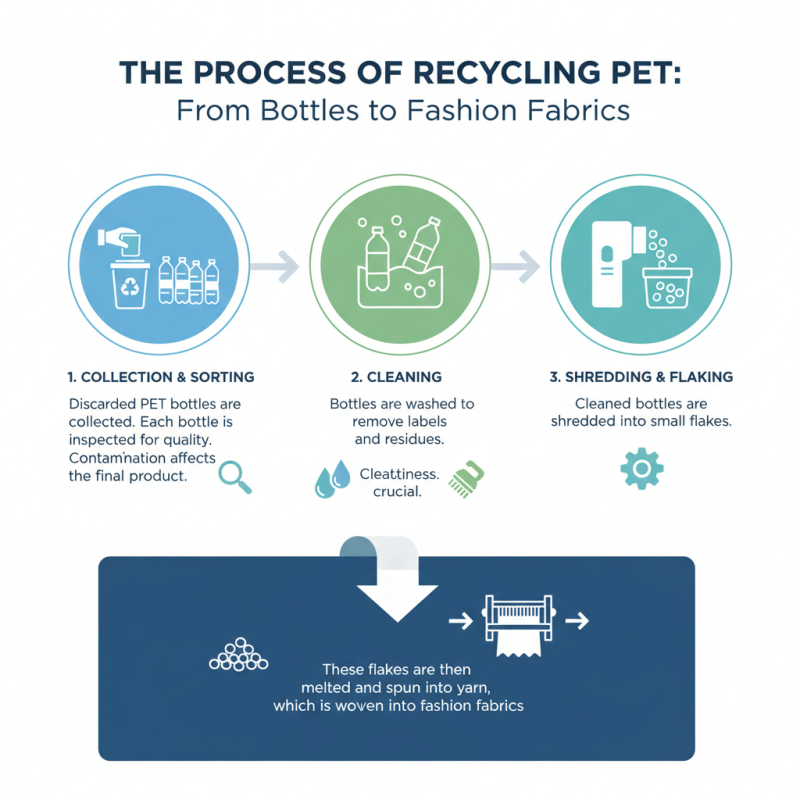
Recycling PET plastic into fashion fabrics involves a fascinating process. First, discarded PET bottles are collected from recycling programs. Each bottle is inspected to ensure quality. This initial stage is crucial; any contamination affects the final product. Once sorted, the bottles undergo cleaning to remove labels and residues. This step highlights the importance of cleanliness in recycling.
After cleaning, the bottles are shredded into small flakes. These flakes are then melted down and extruded to form fibers. This transformation is both poetic and practical. Yet, the process can produce waste or leftovers. These scraps remind us of the imperfections in recycling practices. Next comes spinning and weaving. The resulting fabric can vary in texture and quality. It is here that creativity meets sustainability. Fashion designers face the challenge of using imperfect materials while maintaining aesthetic appeal. Sustainability is about choices, and these choices can sometimes feel limiting.
Once the fabric is ready, it can be dyed and treated. Eco-friendly dyes are often preferred, but they too pose challenges. Not every dye is sustainable. This prompts designers to reflect on their impact. The journey from bottle to fabric embodies both innovation and responsibility. The quest for sustainable fashion continues, urging all to consider their role in this cycle.
Designing Fashion: Creative Approaches Using Recycled PET Fabric
Sustainable fashion is the future, and recycled PET fabric plays a vital role. Designers are finding creative ways to use this material in their collections. They transform plastic waste into stylish garments, fusing environmental consciousness with cutting-edge aesthetics. Each piece tells a story, bridging the gap between sustainability and chic design.
When designing with recycled PET fabric, consider color and texture. Mixing materials can create unique contrasts. Explore patterns that emphasize the fabric’s origins. This not only adds depth but can spark conversation about sustainability. However, the challenge lies in sourcing quality recycled fabric. Not all suppliers are equal, and making the right choice takes time and effort.
**Tip**: Experiment with layering and upcycling techniques. Old garments can become parts of new designs. This reduces waste and enhances creativity. Start small, like turning a discarded bag into a trendy accessory.
Another approach is to focus on local production. This reduces carbon footprints and supports local economies. Collaborating with local artisans can infuse authenticity into your designs. But ensuring fair wages and ethical practices sometimes complicates these relationships. Reflect on the impact of your choices and strive for improvement.
Sustainable Fashion Brands: Pioneers of Recycled PET Fabric
Sustainable fashion is gaining ground, particularly with the adoption of recycled PET fabric. This material, made from post-consumer plastic bottles, is revolutionizing how brands approach environmental responsibility. Reports show that producing one ton of recycled PET fabric reduces CO2 emissions by over 70%. This is a significant step toward minimizing the impact of the fashion industry.
However, the journey isn't without challenges. While many brands are pioneers in using recycled PET, the supply chain can be complex. Sourcing high-quality recycled fibers requires robust systems. Not all recycled materials meet the desired performance standards. Therefore, ongoing research is crucial to improve the quality and availability of recycled fabrics.
Some brands are committed to transparency in their production methods. They disclose how much recycled content their products contain. But gaps still exist in consumer awareness. Many shoppers are unaware of the benefits associated with recycled PET. Bridging this knowledge gap is essential for driving demand and promoting sustainable choices. By addressing these issues, the industry can take further strides toward a more sustainable future.
Future Trends in Sustainable Fashion with Recycled PET Innovations
The fashion industry is embracing recycled PET fabric like never before. People are drawn to sustainability. However, the journey is not flawless. Often, the quality of recycled fabrics can be inconsistent. Designers face challenges in sourcing reliable materials. Innovations are essential to tackle these issues.
New technologies are emerging to improve recycled PET. For instance, advanced recycling methods enhance fiber strength and texture. These developments allow designers to create appealing clothing. However, not all innovations are widely accessible or affordable. Smaller brands may struggle to keep up with these advancements. This disparity raises questions about inclusivity in sustainable fashion.
In the quest for eco-friendly practices, the future of recycled PET looks promising. The potential for unique designs grows as recycled fabrics evolve. Yet, the industry must remain aware of its imperfections. It must balance innovation with ethical practices. Reflecting on these challenges is essential for real progress. Without addressing them, true sustainability may remain a distant goal.
How to Use Recycled Pet Fabric for Sustainable Fashion? - Future Trends in Sustainable Fashion with Recycled PET Innovations
| Dimension |
Description |
Current Trends |
Future Innovations |
| Material Sourcing |
Sourcing PET from recycled plastic bottles |
Increased availability of recycled PET |
Emerging new recycling technologies enabling higher quality fabrics |
| Production Process |
Recycling process transforming PET into fibers |
Adoption of eco-friendly chemical processes |
Biodegradable additives to enhance sustainability |
| Consumer Awareness |
Growing interest in sustainable fashion |
Increase in eco-conscious buyers |
Enhanced transparency in sourcing and production |
| Design Innovations |
Unique designs utilizing recycled materials |
Combination of style and sustainability |
Integration of smart textiles and fashion technology |
| Market Growth |
Rising demand for environmentally friendly products |
Expansion of recycled fabric market |
Potential growth in global eco-fashion industry |