Leave Your Message

Why Is Yarn Dyed Fabric More Expensive?

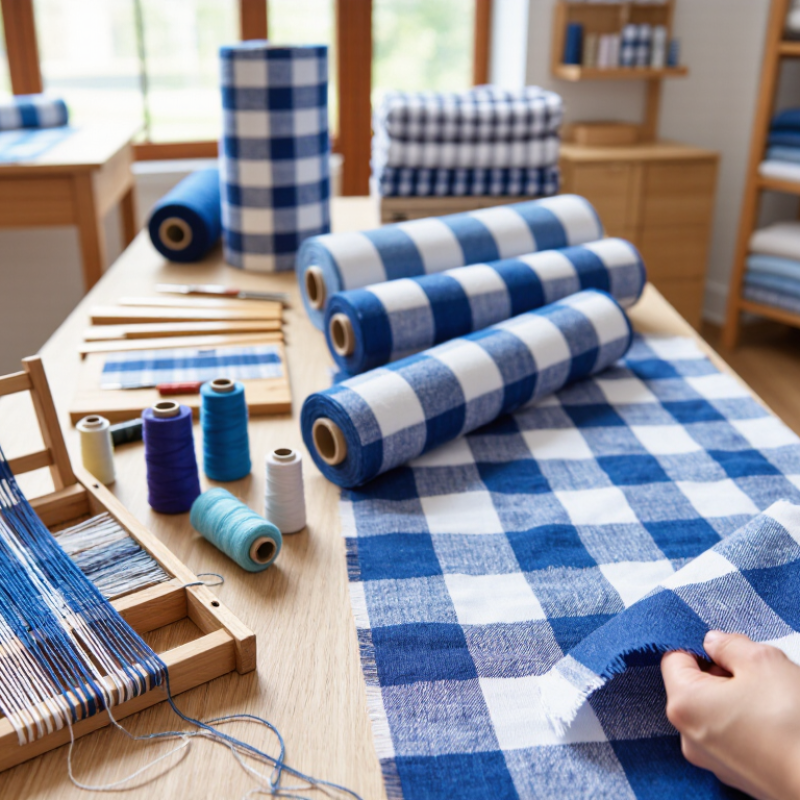
Why does one checked cotton shirt cost more than another with a similar pattern? The difference may begin before weaving. Yarn Dyed Fabric uses yarns colored before they enter the loom. That sequence adds production steps, inventory decisions, and opportunities for costly mistakes. A blue-and-white gingham, for example, requires separately prepared yarn colors and a carefully arranged weaving plan. Precision takes time.

Textile designer and woven-fabric specialist William Morris offered a useful perspective on value: “Have nothing in your houses that you do not know to be useful, or believe to be beautiful.” His words concern design and usefulness, rather than textile pricing, but they frame a practical purchasing question. What does the premium deliver? Dyeing separate yarn batches, checking shade consistency, and arranging colored warp threads all require resources. Small orders can increase unit costs because preparation expenses are spread across fewer meters. Pattern changes may also require additional loom setup, while shade mismatches can create waste or delay production.

Still, a higher price deserves scrutiny. Yarn Dyed Fabric does not automatically outperform every piece-dyed or printed alternative. Colorfastness depends on fiber, dye selection, processing, and finishing—not simply when dyeing occurs. Check the evidence. A supplier should explain fabric composition, order quantity, testing results, and the costs behind its quotation. Buyers can also compare washed samples for shrinkage, color change, and appearance. Sometimes the premium buys distinctive woven patterns and careful color coordination. Sometimes it reflects inefficient production. Understanding that difference makes the price easier to judge.
Why Is Yarn Dyed Fabric More Expensive?

What Is Yarn-Dyed Fabric and How Is It Made?

Yarn-dyed fabric is made from yarns colored before they are woven or knitted into cloth. The sequence matters. Unlike piece-dyed fabric, which receives its color after fabric formation, yarn-dyed material starts with separately colored threads. A blue-and-white gingham, for example, gets its checks from the arrangement of blue and white yarns across both fabric directions. Stripes, plaids, and chambray are familiar examples. However, a woven pattern alone does not guarantee better quality or longer-lasting color.

Production begins with yarn selection, cleaning, and preparation so the fibers can absorb dye more evenly. Cotton yarn may undergo scouring to remove waxes and processing residues. Dyeing often takes place in perforated packages, with dye liquor circulating through the wound yarn. Flow needs care. If packages are wound too tightly, dye penetration can become uneven, leaving differences between their inner and outer layers. After dyeing, workers rinse and dry the yarn, then check its shade against an approved color standard.

The colored yarns are arranged for weaving, with each color assigned a position in the planned pattern. For a checked cloth, colored lengthwise warp yarns intersect with colored crosswise weft yarns to build the design. Preparing separate colors, matching dye lots, and managing leftover yarn add labor, time, and inventory costs. These steps help explain the higher price. Still, paying more does not automatically mean the fabric will resist fading or rubbing. Those properties need testing, and I would hesitate to judge them from a crisp-looking plaid alone.
How Dyeing Yarn Before Weaving Adds Production Steps

Yarn dyeing adds work before a loom can produce any fabric. Mills prepare the yarn, wind dye packages, dye each color separately, rinse, dry, and rewind for weaving. Each transfer requires labor, machine time, and checks. Package density matters. Uneven winding can restrict dye circulation, leaving shade differences between a package’s inner and outer layers. A striped shirt fabric may require several approved yarn colors before weaving begins.

Fiber choice also affects processing. The 2024 Materials Market Report records polyester at approximately 57% of global fiber production in 2023. This matters because polyester commonly requires pressurized dyeing near 130°C, adding heating and cooling stages before weaving. Cotton follows different dyeing conditions, but still requires controlled preparation and rinsing. Scheduling adds cost. A delayed navy batch can hold up an entire navy-and-white fabric order. Mills also check shade consistency and yarn strength before releasing dyed yarn to weaving. These steps explain cost pressures, although the report does not establish a universal yarn-dyed price premium.

Tips: Ask suppliers whether quotations include sample dyeing, color approval, and allowances for leftover colored yarn. Request shade samples before approving bulk production. Small orders often spread preparation costs across fewer meters. Combining orders with identical yarn specifications and colors may help, but matching color names alone is insufficient. This deserves scrutiny: longer production does not automatically mean better fabric.

Why Yarn Dyeing Requires More Labor, Energy, and Quality Control

Yarn dyeing adds work before weaving even begins. Workers wind yarn onto perforated tubes, group packages by shade, and load pressurized dyeing vessels. Packing density matters. Uneven winding can restrict dye circulation, leaving a package’s center paler than its surface. Each color also needs recipe preparation, sampling, and handling. A small checked fabric might require four separately managed yarn colors, increasing setup work without increasing saleable fabric.

Heat adds cost. The European Commission’s 2023 Textiles Industry BREF describes conventional polyester dyeing at approximately 130°C under pressure. Heating the bath, circulating liquor through yarn packages, and drying wet yarn all consume energy. Actual demand varies with fiber, equipment, and loading. The 2018 Measuring Fashion report attributed 36% of modeled apparel-production climate impacts to dyeing and finishing. That figure covers broader processing, so it cannot establish a specific yarn-dyeing price premium. Still, it shows why wet-processing efficiency deserves attention.

Quality control starts with laboratory shade trials and continues through production. Technicians compare samples against approved standards and check color differences under controlled lighting. They also examine shade variation within packages and between batches. A practical inspection might compare yarn from a package’s inner, middle, and outer layers. Mistakes travel downstream. Once contrasting yarns become woven stripes, a shade mismatch can affect an entire fabric roll. Reprocessing may consume more water, chemicals, heat, and labor, and some shade differences remain difficult to correct. Suppliers should therefore explain their sampling procedures and rejection criteria; a higher price alone does not prove better control.

How Pattern Complexity and Batch Size Affect Fabric Costs

Yarn-dyed fabric costs more partly because its colors and patterns must be planned before weaving begins. Pattern complexity adds work. A two-color stripe usually requires simpler yarn arrangements than a six-color plaid with an uneven repeat. Each extra color can require separate dyeing, stock tracking, and careful placement in the warp or weft. Small mistakes become visible. One misplaced yarn can interrupt a check across many meters of cloth. More demanding designs may also require additional loom adjustments and inspection, although extra colors do not automatically mean slower weaving.

Batch size changes how these preparation costs are shared across the finished fabric. Setup still takes time. Dye preparation, loom threading, and trial weaving remain necessary even when an order is small. Consider a hypothetical setup cost of $300 for the same construction and pattern. Spread across 100 meters, that adds $3 per meter before yarn, weaving, and finishing costs. Across 1,000 meters, the same setup adds $0.30 per meter. Actual quotes vary, but this calculation explains why small custom orders often carry higher prices.

Complex patterns and small batches can compound each other’s costs, particularly when several custom yarn colors are involved. A mill may need to dye more yarn than a short order consumes. That surplus still has a cost, even if it never enters the finished roll. Simplifying a plaid might help, but removing one color will not necessarily produce a meaningful saving. Buyers should request comparable quotes for different quantities and repeats, with the same width, weight, and finishing requirements.

Why Is Yarn Dyed Fabric More Expensive? How Pattern Complexity and Batch Size Affect Fabric Costs

Yarn dyed fabric requires yarn to be dyed before weaving. Patterns can add work through color preparation, yarn arrangement, loom setup, and pattern checks. The chart shows how allocating a fixed setup cost across different batch sizes changes the setup cost per meter.

Larger batches spread setup costs across more fabric. In this scenario, a $300 setup adds $3.00 per meter to a 100-meter batch, but only $0.06 per meter to a 5,000-meter batch. More demanding patterns can increase setup work, making small production runs particularly expensive per meter.

Data basis: These are calculated scenarios, not observed market prices or industry averages. Assumed fixed setup costs are $100 for a simple stripe, $300 for a multicolor check, and $600 for a complex woven pattern. Batch sizes are 100, 500, 1,000, and 5,000 meters. Every plotted value equals the assumed setup cost divided by batch length. Pattern labels illustrate potential setup differences; actual costs depend on construction and production conditions. Yarn, dyeing, weaving, finishing, waste, and freight are excluded, so this chart shows only one component of total fabric cost.

How Yarn-Dyed Fabric Costs Compare with Other Dyeing Methods

Yarn-dyed fabric usually costs more than comparable piece-dyed fabric because color enters production before weaving. Each yarn color needs its own dye lot, preparation, and inventory tracking. A blue-and-white check, for example, requires separate yarn supplies and careful loom setup. Costs accumulate early. Mills must also manage shade consistency between batches, especially when customers reorder the same pattern months later. These steps add handling and scheduling work, even before the finished fabric reaches inspection.

Piece dyeing generally offers a cheaper route for solid colors because mills dye fabric after weaving. One undyed fabric can serve several color orders, reducing the need to stock different colored yarns. Printing can also cost less for multicolored designs, particularly when only the surface needs decoration. However, elaborate print preparation or small production runs can narrow that saving. Comparisons need context. A basic yarn-dyed stripe may cost less than a heavily processed printed fabric.

The price gap depends on order size, fiber type, pattern complexity, and finishing requirements. Small orders can carry higher setup costs per meter, while repeat orders may spread those costs further. Yarn dyeing does not automatically guarantee better softness, strength, or colorfastness; those depend on materials and processing. It is tempting to treat a higher quote as proof of quality, but that shortcut deserves questioning. Compare quotations using the same fabric weight, construction, finish, and testing requirements.

Why Is Yarn Dyed Fabric More Expensive? - How Yarn-Dyed Fabric Costs Compare with Other Dyeing Methods

Yarn-dyed fabric often costs more because color is introduced before fabric formation, adding yarn handling, color coordination, and production planning. The actual premium depends on the fabric specification, design, order quantity, and processing route.

Qualitative comparison of established production methods. Cost statements describe manufacturing considerations, not fixed market prices or universal percentage premiums.
Comparison Factor Yarn Dyeing Piece Dyeing Garment Dyeing
When Color Is Applied Yarn is dyed before weaving or knitting. Fabric is dyed after weaving or knitting, typically before cutting and sewing. Garments are dyed after assembly, using materials and components suitable for the process.
Typical Applications Woven checks, plaids, stripes, and knitted patterns formed from differently colored yarns. Solid-color woven and knitted fabrics produced from prepared undyed fabric. Finished garments requiring a chosen overall color or a washed appearance.
Main Cost Drivers Yarn preparation, dye-lot management, drying, winding as required, and coordination of colored yarns during fabric production. Fabric preparation, dyeing, washing, drying, finishing, and control of shade uniformity across the fabric. Garment preparation, dyeing, washing, drying, dimensional control, and compatibility of sewing threads, trims, and other components.
Why Costs Can Increase Multiple yarn colors can require separate dye lots and additional handling. Patterned production also requires coordination of yarn quantities and placement. Small color lots, difficult shades, demanding fastness requirements, and reprocessing can increase cost per unit. Processing assembled garments requires control of tangling, creasing, shrinkage, and differences in dye uptake between components.
Color and Pattern Flexibility Different yarn colors can create patterns within the fabric structure. Conventional piece dyeing typically produces an overall shade. Yarn-color checks and stripes generally require another route or special material effects. Conventional garment dyeing typically colors the assembled item overall. Special effects depend on the materials and process used.
Inventory Commitment Color decisions are made before fabric production, creating inventories of specific colored yarns and patterned fabrics. Prepared undyed fabric can be allocated to different colors later, allowing color decisions after fabric formation. Suitable undyed garments can be allocated to colors after sewing, although garment style and size quantities are already committed.
Effect of Order Quantity Small quantities spread setup and handling costs over fewer units; multiple colors can further complicate minimum economical batch sizes. Larger compatible dye lots can spread setup costs over more fabric, subject to machine capacity and quality requirements. Cost depends on batch size, garment weight, machine loading, and the number of styles and colors being processed.
Quality-Control Focus Yarn shade consistency, colorfastness, correct color placement, and pattern consistency during weaving or knitting. Shade consistency within and between fabric lots, level dyeing, dimensional stability, and colorfastness. Shade consistency between garments and components, finished measurements, seam appearance, and colorfastness.
Cost Exposure if Processing Fails Problems may affect dyed yarn or fabric subsequently made from that yarn, depending on when they are detected. Problems can affect fabric that already includes yarn and fabric-formation costs. Problems can affect garments that already include fabric, cutting, sewing, and component costs.
Practical Cost Comparison Often carries a premium over comparable solid piece-dyed fabric, particularly for multicolor designs and smaller orders. Often economical for solid colors because color is applied to fabric in batches without coordinating multiple colored yarns. Has no universal cost ranking against yarn or piece dyeing. Compare total finished-garment cost and inventory requirements.

Compare equivalent specifications: Hold fiber content, yarn count, fabric construction, weight, usable width, finish, colorfastness requirements, order quantity, and delivery terms constant wherever possible. A yarn-dyed pattern and a solid piece-dyed fabric provide different visual results.

Pricing basis matters: Yarn-dyed and piece-dyed fabrics may be quoted per meter, yard, or kilogram, while garment dyeing may be quoted per garment or kilogram. Convert quotations to the same finished-product basis before comparing costs.

No fixed premium applies: Dyeing method alone does not establish price, colorfastness, water use, or energy use. Those outcomes also depend on fiber, dyes, equipment, processing conditions, and quality requirements.