Leave Your Message

Best Imitation Linen Fabric Manufacturers in China?

Choosing among the Best Imitation Linen Fabric Manufacturers in China requires more than comparing prices or catalog photographs. Imitation Linen Fabric can offer a linen-like texture with different care and performance characteristics. The exact result depends on fiber content, yarn construction, weave, finishing, and quality control. A swatch tells you more than a polished product image.

Textile researcher Richard A. Blackburn’s published work offers a useful broader reminder: assess a textile by its material properties and intended use, not appearance alone. This is a paraphrase of his general research perspective, not a verified quotation about imitation linen. That distinction matters. Buyers should ask manufacturers for fiber-composition details, usable-width tolerances, colorfastness information, and samples from the same production finish they plan to order. Rub the surface. Hold it against daylight. Check how it drapes after washing.

Small details count. A fabric may look convincing on a screen yet feel too stiff for relaxed clothing. Another may suit curtains but wrinkle or snag more than expected. No supplier is perfect, and sample-to-bulk variation deserves honest discussion. Ask how defects are inspected, how repeat orders are matched, and what documentation accompanies each specification. Compare answers, not just claims.

This guide introduces manufacturers to evaluate, while helping buyers frame practical questions before requesting quotations. The best choice depends on the intended product, target hand feel, order quantity, and acceptable variation. There is no universal winner. A careful swatch review can prevent an expensive mismatch.
Best Imitation Linen Fabric Manufacturers in China?

What Is Imitation Linen Fabric and How Is It Made?

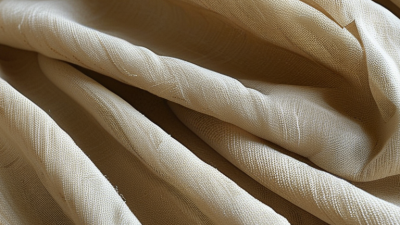
Imitation linen is made to resemble linen’s dry hand, matte surface, and visible slubs. But it is not necessarily flax. Manufacturers commonly use polyester, viscose, cotton, or blends, so check the fiber content rather than judging by appearance.

124 million tonnes

Textile Exchange’s 2024 Materials Market Report puts global fiber production at 124 million tonnes in 2023, with polyester accounting for 57%. This is useful market context, not a measurement of imitation linen.

To create the look, mills may spin fibers into slub yarn with deliberately uneven, thick-and-thin sections. They weave the yarn, often in a plain structure, leaving small irregularities visible. Washing and softening finishes can alter the drape and hand feel.

Some versions look convincing. A swatch can mislead. A linen-like surface does not guarantee linen-like cooling or moisture behavior.

Polyester-rich fabric may crease less, but can feel warmer; synthetic textiles can also shed microfibers during washing. Ask for fiber percentages, fabric weight, and wash-test results before choosing a fabric.
Key Qualities to Compare Among Chinese Manufacturers

When comparing Chinese imitation linen fabric manufacturers, start with fiber content and construction, not the product name. “Imitation linen” can mean polyester, viscose, or blended yarns, and each feels different. Request a technical sheet listing composition, width, weight, weave, and shrinkage after washing. Then order a sample in the intended color. Check slubs, seam behavior, and surface pilling through ordinary handling. Touch matters. A small showroom swatch may hide stiffness or shine that becomes obvious in a larger cut.

Ask how production batches are controlled. Can the manufacturer retain a reference swatch and report shade variation between dye lots? Request test records for colorfastness, dimensional change, and abrasion, with methods and conditions stated. For upholstery, rub the sample; for curtains, hang it near daylight. Ask about minimum order quantity, lead time, packaging, and the process for handling defects. Compare written tolerances, not just prices. A helpful sales contact is useful, but it cannot replace documented checks. No factory is flawless; vague answers or inconsistent sample details deserve another look before bulk production.

China’s Main Imitation Linen Fabric Manufacturing Regions

China’s imitation linen supply is concentrated in several textile clusters, each with a different production strength. Shaoxing’s Keqiao district is known for broad fabric sourcing and trading, while Shengze in Jiangsu has dense weaving and finishing capacity. These clusters make it easier to compare polyester, viscose, and blended fabrics in one sourcing trip. Still, a trading hub is not always the factory floor.

Fujian’s textile centers, including areas around Quanzhou, also produce synthetic and blended fabrics. Buyers may find linen-look cloth with varied yarn counts, surface slubs, and weights there. The National Bureau of Statistics’ 2023 Statistical Communiqué reported 71.3 million tonnes of chemical-fiber output, up 8.5 percent year on year. That national figure helps explain the scale of the polyester supply used in many imitation-linen constructions; it does not measure linen-look fabric alone.

For a practical comparison, request the same specifications from mills in different regions: fiber content, fabric weight, width, shrinkage, and colorfastness results. Ask for a cut swatch, not only a screen image. Keqiao can be useful for rapid sampling and supplier comparisons; Shengze may suit buyers seeking closer coordination with weaving and finishing. Regional labels are only a starting point. A supplier’s actual machinery and subcontracting route deserve checking.

How to Evaluate and Verify Potential Suppliers

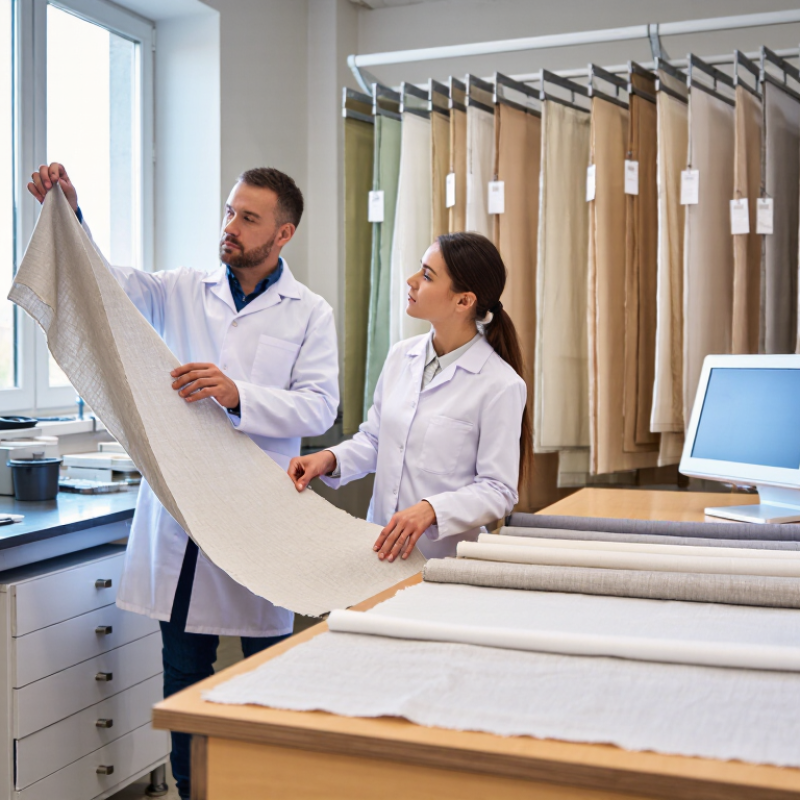
When assessing imitation linen fabric manufacturers in China, verify the fabric rather than relying on a catalogue description. Ask for the exact fiber blend, yarn construction, fabric weight, width, and finishing details. A swatch should feel consistent across its surface, with slubs that look woven rather than printed. Check whether the bulk order matches the approved sample. Small differences matter.

Textile Exchange’s Materials Market Report 2024 estimates that global fiber production reached 124 million tonnes in 2023, with polyester making up 57%. That scale makes clear fiber disclosure important: “linen-look” describes an appearance, not a composition. Request a recent test report covering fiber content, colorfastness, shrinkage, and pilling. Confirm the laboratory and report number independently, preferably with an ISO/IEC 17025-accredited testing provider. Ask for dated production photos, traceable sample labels, and a written quality-control process. A neat sample can still mislead. I would also request a small trial order; it adds time, but reveals problems that polished sales documents may miss. The process is not perfect, and test results cannot predict every dye-lot variation.

Sourcing Considerations for Buyers and Importers

When comparing imitation linen fabric manufacturers in China, start with the specification, not a showroom photo. Ask for fiber composition, usable width, weight, weave, finishing details, and acceptable shade variation in writing. A polyester-rich fabric may resist wrinkles differently from a viscose blend, so match the composition to the garment or home-textile use. Small details matter.

Request a sample cut from current production, not only a hand-picked swatch. Check it under daylight and indoor lighting. Rub, wash, and press a piece using your planned care method. Record shrinkage, pilling, color change, and hand feel. One test cannot replace a full quality program, but it may reveal mismatches early. A neat swatch can still mislead.

Before placing a bulk order, confirm minimum quantity, lead time, packaging, inspection method, and how defects are handled. Ask whether the supplier controls weaving and finishing, and request recent production references or process records where available. Ask directly. Compare quotations using identical specifications; a lower price may reflect lighter weight or simpler finishing. Keep approved samples and signed specifications for repeat orders. Shade consistency can still vary between dye lots, so agree on tolerances and a practical remedy before shipment.